1969 was an eventful year. The country was still in an uproar over the Vietnam conflict. Neil Armstrong took his small step for man and giant leap for mankind. In upstate NY, about half a million people made their way to Max Yasgur’s farm to listen to a little music. Chappaquiddick. And the two most important sports events of the year ended in surprising ways: Joe Namath ‘guaranteed’, then delivered, a victory for his New York Jets football team over the heavily favored Baltimore Colts in the Super Bowl. Then, later that summer, the most hapless of teams, the New York Mets, put together a season for the ages, winning their first World Series Championship, a feat pegged at 100-1 odds pre-season.
In 1969 I turned 14 years old. My mother and I were already fans of the loveable loser Mets. My father, having been born and raised in Brooklyn, was an ardent fan of the Brooklyn Dodgers until they, along with the baseball New York Giants, moved to California in 1957. His broken heart did not follow them west. Left with only the hated Yankees, he divorced himself from any team affiliation but enjoyed all sports purely for entertainment value. Looking back, I see how his lack of fandom may have influenced the ease with which I move allegiance for teams. But back in my teen years, I was all about the M-E-T-S METS of New York town. The Metropolitans were one of baseball’s first expansion teams, formed in 1962. It is difficult, nay impossible, to overstate how bad they were. Their inaugural season record of 40-120, more than 60 games out of first place, still stands as the worst season in baseball…ever. This hapless team was managed by 71-year-old Casey Stengel who previously managed the NY Yankees to 7 World Series titles in 12 years. It was clear that he took his new role more as a hobby.
The Mets played at Shea Stadium in Flushing Meadows, Queens, where, in 1966 at 11 years old, I made my first visit to a major league ballpark. I have vivid memories of that visit. A neighbor took his two kids and me.
Digression: This neighbor had hit it big selling coffee futures just as coffee was really heating up in America. He parlayed his success into a full-fledged financial management business and was soon to move out of our humble neighborhood to the ritzier Dix Hills area on the north shore of Long Island. Meanwhile, my father had come into some unexpected money after an accident in his truck, so he invested in an unknown company that made a strange little car that he loved. He bought a Toyota Corona 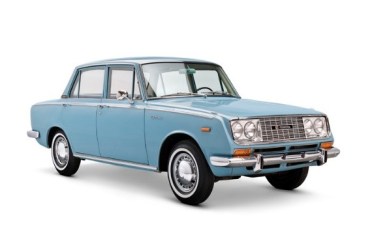 and used the rest of the money to invest in their stock. Soon this advisor neighbor talked my dad into selling the Toyota stock to buy into a cosmetics company that soon went bankrupt. Of course, Toyota (the Google/Amazon/Apple of its time) doubled in value many, many times over. Major lost opportunity. Still, the neighbor was taking me to my first baseball game, so I guess we are all even.
Shea stadium had its own exit off Grand Central Parkway that dumped directly into a large parking lot. We made our way into the stadium and up the ramps that circled the building. 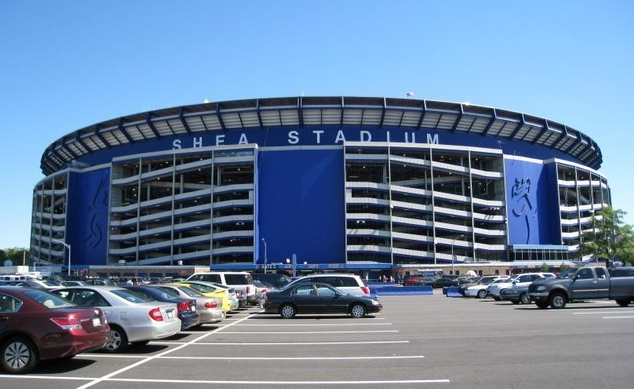
Finally reaching our level, we walked through the aisle and emerged with a view, now burned into my brain, of the verdant green field opening up in front of me. I had never seen anything quite so beautiful. Maybe you have a similar memory?
The Mets lost the game. In fact, they lost most games, always finishing in last place or second-to-last place…until 1969. That season began better than most, with new manager Gil Hodges taking a more serious, more supportive, more strategic approach to managing. It seems funny to say, but I learned a lot about the intricacies of baseball from watching how he handled his team in orange and blue. He was also blessed with a phenomenal young pitching staff. 23-year-old Tom Seaver, 1967 Rookie of the year, future 3-time Cy Young Award winner and Hall of Famer, was the Ace who would go on to win 25 games in 1969. He and his debutante wife Nancy were the toast of New York town. (In retrospect, I am awestruck at how well this couple in their early 20’s handled their local stardom with such poise and grace.)
Jerry Koosman, 25, was the lefty yin to Seaver’s yang. 22-year-old rookie Gary Gentry was a 13-game-winning fireballer, and a Texan named Nolan Ryan, also 22, was fresh off his rookie season. Ryan, another future Hall of Famer, is now regarded as one of the hardest throwers of all time. He owns the Major League Baseball strike-out record (by a wide margin) and has recorded the most no-hitters of any pitcher in baseball. Interestingly, despite his 27-season career, his only appearance in a World Series was with the ’69 Mets. The bullpen was also strong with a young, effervescent Tug McGraw, who would go on to have a wildly successful 19-year career, as well as a country-singing son named Tim with his own wildly successful career.
The position players were a rag-tag group. First baseman Ed Kranepool was the only holdout from the inaugural 1962 season, a lanky horse-faced guy who never really lived up the great potential everyone saw. Ken Boswell was the tentative second baseman nicknamed ‘stone-hands’ for good reason. I loved Bud Harrelson, a light-hitting but superb shortstop. Third base was platooned by Ed Charles and Wayne Garrett. The former a seasoned veteran and the latter a rookie who looked like Opie Taylor. Jerry Grote was the appropriately grizzled, scrappy catcher. The outfield was anchored by Cleon Jones, a bull of a man, and his boyhood friend, the fleet Tommy Agee. They grew up together outside of Mobile, Alabama in a mostly racist, segregated existence. For these two to end up playing next to one another on a championship team is just beyond comprehension. And so, by the way, were they. I mean, to me, they were impossible to understand when they spoke! Cleon had a very slow southern drawl and he seemed to swallow every word that tried to make its way out of his mouth. Agee was the opposite. He spoke so fast, with so much excitement, that three sentences had gone by before I deciphered the first one. And I got a lot of practice because these two were rightfully interviewed often on sportscaster Ralph Kiner’s postgame show, Kiner’s Corner. (and hysterically, at the end of the show they would get a blender or some other sponsor’s kitchen tool for appearing). I loved those two guys. Ron Swoboda rounded out the outfield. Swoboda was a beefy guy who was simply unreliable in the field, but whose bat was feared by opposing pitchers. He was a character and was loved by NY fans, so much so that he soon opened a string of successful restaurants. There were also important role players like Art Shamsky, another poor fielder but potent bat (and a rare Jewish baseball player), and light-hitting utility fielder Al Weis (yet another Jew!)
So the Mets started the season strong, but it seemed to the world that the team of destiny in 1969 was the Chicago Cubs. The Cubs were stacked.  It started with the eternally positive Mr. Cub, Ernie Banks. He is credited with saying “Let’s play 2!” as an homage to his enthusiastic approach and love for the game. Few know that he was misquoted. In truth, he was a bit lazy and actually said: “Let’s play ‘til 2”. (Old Met-fan joke there). Ron Santo, Billy Williams, Don Kessinger, Randy Hundley and a strong pitching staff anchored by Fergie Jenkins helped the Cubs lay claim to first place from the opening game of the season, extending their lead with each passing week. The Mets had miraculously played themselves into second place by 6 games before the All-Star break, with a 3-game series with the Cubs looming. The Cubs and their acerbic manager Leo Durocher were cocky and didn’t see the Mets as true contenders, and who could blame them? The Mets stole 2 of 3 at Wrigley Field and the Cubs got their first taste of the magic spun by the Amazins’. Now the baseball season is long, too long, at 162 games. And in order to win a division, a team must win the games it should win, and a good number of games it probably shouldn’t. And the Mets did both. Here are a few examples:
- They won both games of a doubleheader by the same score: 1-0. In each game, the starting pitcher drove home the only run.
- In one game, they fanned 19 times (then, a record), had only 2 hits, and gave up 3 runs, but won 4-3. Ron Swoboda had both of those hits. Sandwiched between his two strikeouts, he hit two 2-run homers, each time after a walk to the previous batter.
- Perhaps even more demoralizing, they won 1-0 after a team of Expos pitchers managed a one-hitter, which was a bunt that died as it hit the third base bag, scoring the winning run.
- They won 6-5 in 14 innings after 2 walks, a stolen base and a wild pitch.
Despite these unlikely victories, the Mets fell into third place, 10 games behind the streaking Cubs, late in the season.
Another digression: I moved to Chicago in 1980 and was given horrible advice by my boss. He told me to move to Schaumburg. Schaumburg, it turns out, is a suburb primarily known for its mall. Here I am, single, in my early 20s, moving to a world class city and he tells me to move to the suburbs. Still, our office was close by and there were lots of what was then called “singles-complexes” in the ‘burbs, so I moved into one named Barrington Lakes. (no lakes, only one retention pond).  I rented a studio apartment and quickly met lots of people at the clubhouse, pool, and most importantly, the neighborhood bar next door. Literally. It was named the Neighborhood Inn. The owner’s father had a true neighborhood bar in Chicago, and his son wanted to recreate it in a strip mall in the suburbs. Didn’t really work, but I met most of my friends here through the many sports teams sponsored by the bar. I bring this up because Chicago is a great sports town and the most famous team of all? The ’69 Chicago Cubs. EVERYBODY reminisces about how great they were, and how fun they were to watch. They were revered. I remember being very confused. I would have to ask many people if they realized that the Cubs did not win anything at all. In fact, they crumbled. Fell apart. Choked. Crashed. Imploded. People didn’t seem to care. They loved their Cubs and what could have been in 1969. The Cubs hadn’t won a baseball championship for over 6 decades, (it would take another 4), and fans hung onto anything they could. As a fan of the early Mets, I understood.
Anyway, the Cub free-fall began. They lost, lost, lost and the Mets won, won, won. Suddenly, the Mets were just 2.5 games behind the Cubs who were coming to Shea Stadium for a 2-game series. My friends and I HAD to go. Fred, Howie and I took the Long Island Railroad out of Massapequa, changed trains in Woodside, and headed for the Willets Point/Shea Stadium stop. We’d made the trip several times already in ’69 but showing up during the most important series of the year was heady stuff. Our nose-bleed seats were barely in the stadium, but it didn’t matter. 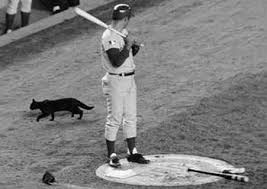 The crowd was absolutely nuts as Koosman won a nail-biter 3-2. The next day Seaver pitched, and in the middle of the game a black cat came walking out onto the field, circled Ron Santo in the on-deck circle and bee-lined directly toward Manager Leo Durocher in the dugout. I didn’t get to see this one live, but that was a video clip played many times in recaps of the miracle season. The Mets won handily, 7-1, and sat only a half game out of first place. One night later, the Cubs lost to the Phillies and the Mets won in extra innings again, dropping the Cubs out of first place for the first time all year, and putting the Mets in first for the first time…ever. There were still 19 games to go so it was anyone’s division to win. But the cat had already been let out of the bag, and the Mets won 14 of their last 19 while the Cubs seemed to lose every game. Miraculously, the Mets were headed to the very first National League Championship series where they would face the Atlanta Braves in the first two-division postseason.
The Atlanta Braves were hot; red hot, winning 10 games in a row and 17 of their last 21, and the first 2 games were scheduled in Atlanta. No matter, the visiting Mets beat Phil Niekro and his Braves 9-5 in game 1. The next day the Mets schooled Hank Aaron and his Braves 11-6 in game 2. Back in NY, Nolan Ryan made an extended relief appearance in game 3, scalping the Braves 7-4 to capture the National League Pennant. A 3-game sweep delivered primarily through hitting, not their forte, which was pitching. Would wonders never cease?
The Mets opponent in the World Series was the vaunted Baltimore Orioles, who had also swept their division opponent in 3 games. The Mets had a charmed season and were uncharacteristically productive in the League Championship series. So they were heavy underdogs to Frank Robinson, Brooks Robinson, Boog Powell, Paul Blair and the gifted pitching staff including Jim Palmer, Dave McNally and Mike Cuellar. But truth is stranger than fiction, and here is how the Series played out:
GAME 1: AS EXPECTED
Saturday, October 10, 1969. Tom Seaver vs Mike Cuellar. To no one’s surprise, by the 4th inning the Orioles were ahead 4-0. They went on to win 4-1, beating the Mets best pitcher. Things did not look good.
GAME 2: KOOSMAN GEM
Sunday, October 11. Jerry Koosman vs Dave McNally. No score until the 4th when Donn Clendenon gave the Mets their first lead of the Series with a solo home run. Meanwhile, through six innings, 19 Orioles had come to the plate and 18 had been retired by Koosman, with one walk. No hits. Then in the bottom of the 7th, the Orioles broke through and put together a couple of singles sandwiched around a stolen base, and were on the board, score 1-1. And although Koosman was brilliant, giving up just 2 hits, McNally was pretty great as well, pitching a tight 3-hitter. Neither team made any noise in the 8th, sending the tied game to the 9th. What I remember most about this game is watching it in the living room with my parents, and neither my mother nor I sat during the last half of the game. The Met 9th started depressingly with two quick outs, then veteran Ed Charles slapped a single up the middle. Jerry Grote followed with a single to right, sending Charles to 3rd. Surprisingly, Gil Hodges did not pinch hit for the light-hitting utility infielder Al Weis, who promptly rewarded his manager for his faith by lining a single to left that scored the go-ahead run. Jerry Koosman needed 3 outs to record a 2-hit complete game. One out. Then two outs. Then a walk. Another walk. The winning run was on base. Manager Hodges went to the bullpen but instead of sparkplug Tug McGraw, he called on the only Met with World Series experience, pitcher Ron Taylor. Taylor went to 3-1 on Brooks Robinson who smacked a tough chance down the third base line. Ed Charles fielded it between hops, started to run toward third base for the force out, realized he wouldn’t make it, checked up and threw across his body all the way to first. The ball was woefully short, so first-baseman Donn Clendenon also had to corral a short hop. My mother and I, and the rest of Mets Nation exhaled as one, then celebrated a tied Series at 1 game each.
Game 3: AGEE’s GREATEST GAME
Tuesday, October 13. First World Series game ever at Shea Stadium. Gary Gentry vs Jim Palmer. I remember bouncing down the stairs intent on asking my mother if I could stay home from school to watch the game. As I skidded into the kitchen, she never averted her eyes from the eggs cooking on the stove and said, “Don’t even ask”. Women’s intuition! What, five senses are not enough!? It was OK though because, by the time I got on the bus after school and heard the driver’s transistor radio, the Mets were already up 3-0 in the 5th. Tommie Agee had put the Mets on the board in the first inning with a lead-off home run. The Mets were up 3-0 in the 4th when Baltimore put men on first and third. Catcher Elrod Hendricks hit a long twisting fly ball to left center that looked certain to go to the wall and score a pair of runs. Tommie Agee broke hard but the ball was


GAME 4: SEAVER GEM or GREATEST CATCH EVER
Wednesday, October 14. Tom Seaver vs Mike Cuellar. Another day game; TV revenue had not yet pushed playoff games into the evening. By the time I got on the bus to go home from school, I already knew that Donn Clendenon had put the Mets up 1-0 with a home run. Tom Seaver was having a superb game shutting out the Orioles, but Mike Cuellar was almost as good as the game entered the 9th with Mets hanging onto the 1-0 lead. The Mets only needed three outs to go up 3 games to 1 in the Series, which is worlds away from 2 games each, with a loss. Seaver entered the 9th retiring 18 of the last 19 Oriole batters, and quickly made it 19 of 20. But 2 singles in a row put the tying run at 3rd, go-ahead run on first. Brooks Robinson hit a slashing drive to right-center. I remember my heart sinking as it was clear that this was at least a game-tying hit. The weakest fielder in the game (maybe League), Ron Swoboda, was ambling toward the ball and would do well to field it cleanly on a hop, preventing it from going to the wall and allowing 2 runs to score. Inexplicably Swoboda decided to go for the catch and laid out parallel to the ground.
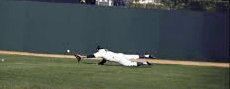 His outstretched body hit the ground at the same time the ball landed in the glove. He did a front somersault and came up throwing. Luckily, he was facing home because he did it so fast that if he came up the other direction, he’d have thrown the ball over the fence. The runner on third tagged and scored but the damage had been minimized by the greatest catch I (and many others) have ever seen before, and since. Simply incredible. The game moved into the 10th with Seaver still on the mound. In the bottom of the 10th, after a Jerry Grote double, JC Martin laid a bunt down the first base line. The pitcher fielded the ball and his throw to first hit Martin on his left wrist. The ball bounced away toward second and Grote motored around to score the winning run. What was that word again? Oh yes: Amazing!
GAME 5: THE SHOE POLISH AFFAIR
Thursday, October 15. Jerry Koosman vs Dave McNally. I tried to stay home from school again but had no more success than on the first attempt. By now though, the whole school was into Met-mania and people had radios everywhere. Sadly, the transmissions told us that the Mets were down 3-0 after three innings. The score stayed that way during the bus ride home and until I joined my mother next to the TV in the 6th inning. Cleon Jones tried to jump over a wild breaking curveball that bounced into the Met’s dugout. Cleon claimed he was hit in the foot, but the ump did not agree. After some haggling by Jones, manager Gil Hodges climbed slowly out of the dugout with a baseball in his hand. He calmly walked over to the ump and showed him a large black smudge where the ball had hit the shoe. The umpire took a few seconds to mull this over, then pointed Jones to first. The crowd went nuts and so did the Oriole manager, Earl Weaver, who had earlier in the game presented a futile argument that one of his men was hit by a pitch that was also not called. His rantings were once again for naught as Cleon Jones stood on first, but not for long. Donn Clendenon promptly hit another mammoth home run to bring the Mets within one run at 3-2, Orioles. In the bottom of the 7th, utility infielder Al Weis came to the plate. I would find out several years later that the Weis’ were from Farmingdale, Long Island and ‘Alan’ actually graduated from my soon-to-be High School, playing on my soon-to-be baseball team. Even in high school, Alan was not known for his power. But miracles do happen, and he tied the game with his first ever home run at Shea Stadium. In the bottom of the 8th the Mets untied the game courtesy of back-to-back doubles and a throwing error. Mets up 5-3 with Koosman still in the game coming out to get the final 3 outs. And get them he did, sending the fans at Shea over the railings onto the field, which needed to be replaced after thousands took home souvenirs of the day the Mets became World Champions.

____________________________________________________________
This blog was inspired by a few things. We moved our household this year and during the packing, I came across a few souvenirs from the ’69 Met season that brought back fond memories that I lingered over. Recently I also read an article in the Wall Street Journal commemorating the 50th anniversary of the Miracle Mets. Then in a newsletter from my college, Binghamton University, I saw that an alumnus had written (yet another) book on the ’69 Mets and their impact on the city. I ordered the book by Wayne Coffey, They Said it Couldn’t be Done, and used it to jump start my memory and provide many of the statistics and details here.
I was an ardent Met fan until the mid-80s when the team changed radically. They became a team that was not worthy of admiration. They lived hard and fast, and although many thought that cool, I was turned off by the drugs, excess alcohol, fights, cockiness, and property destruction. I backed the Yankees, (of all teams!) for a bit before moving to Chicago. Then, working and eventually moving to Wrigleyville, I found the magic lost by the Mets. Yes, it was pathetic that the fans celebrated an underachieving 1969 team that won nothing. But they played in a wonderful little park nestled into a city neighborhood, rimmed with bars, some with batting cages. (drinking and fastballs!). They played only during the day. They had Chicago Hot Dogs. They had The Bleachers. They had Ryne Sandburg. They had Harry Carey. I fell totally in love with the Cubbies and I also cried when they finally won the World Series.
 Let me be Frank...
Good article Frank. We watched many White Sox games in the 1970’s, and I remember one year whenever there was a rain delay, the network would play the show/documentary the “Miracle Mets”. Being a baseball fan, I watched it many times, marveling at the miracle! I have to say it was particularly exciting to me when they beat the Cubs! 🙂
Ann
PS. Are the Mets & Yankees intense rivals like the Sox & Cubs?
LikeLike
Yankees and Mets have a rivalry but it’s nothing like the Cubs and Sox. NY fans tolerate each other and co-exist rather well. It was surprising to me to see how much more intense the crosstown relationship is in Chi-town.
Thanks for reading.
LikeLike
August 21st of 1969- most significant day of the year. Closely followed by the 19th.
LikeLike
Wow, Frank, that was quite a post!!! I really enjoyed it. Having always been a Sox fan I can identify with your feelings. But I am not nearly the fan that my children are! And my South Side husband is not even a fan at all. Keep the blogs coming. I’m a big fan!
LikeLike
I loved reading this. A very heartfelt, artful recounting of some incredible moments in a most memorable year for the blue and orange. Happy to see that your love of the Amazins didn’t wan after your move to Chicago. I’ve always felt that Met fans are a unique breed. Imbued with unflagging hope, humility, and forgiveness with a touch of masochism lol . But all of that collectively engenders character that Yankee fans and the like are lacking. I really enjoyed this. Thank you!!
LikeLiked by 1 person