
I was fortunate to be involved in the launch of quite a few drugs during my career. Some I was more excited about than others. Zofran was one that I thought was nice, but I just couldn’t get too excited about, because it didn’t really treat a disease. Zofran was the very first of a novel class of drugs designed to control the nausea and vomiting caused by chemotherapy. Again, nice, and it had a had a cool generic name, Ondansetron, but it didn’t do anything to advance the battle against cancer. Could I be wrong? I’m never wrong. Well, there was that one time when I thought I was wrong, but turned out I was right, so I guess I was wrong then. But, fortunately, this time I was truly wrong. Zofran was a breakthrough and a godsend to many.
Zofran was initially available only in injectable form, designed for IV infusion. This wasn’t really an issue because the vast majority of chemotherapy agents are also administered IV, either in hospitals or clinics. And it was expensive, especially compared with traditional, albeit woefully inadequate, therapies. It was not an easy sell at first, given the general reluctance of doctors to embrace brand new drugs, especially those that are first in a new class, but oncologists are early adopters and usually willing to try new things to raise their success rate. Oncologists knew what I did not…that the side effects from chemotherapy often kept people from potentially lifesaving, or life-extending, therapy. So, initially they had a short list of patients to call; those who had quit therapy because of their nausea/vomiting, and those who needed higher doses of chemo but simply could not tolerate them. These are the toughest patients to achieve control in, and newer drugs are often tried in these challenging settings. Zofran performed so well with these patients that it soon became a ‘standing order’ for most patients being administered chemotherapy agents.
I had many interactions with patents on Zofran, and my Reps had several every week. Understand that we try a little to avoid direct patient contact because there is not much we can or should say to a patient about their therapy, so it’s best just to avoid the interaction. Our role is to educate and promote our products to health care practitioners, not patients. With Zofran, though, we often found ourselves working in patient care areas, especially in oncology clinics.
These clinics have treatment areas where patients are administered therapy in big recliners hooked up to infusion pumps. It was here that I met lots of Oncology Nurses, and I just want to say that these folks are the angels walking the earth. To a person, these people are smart, personable, compassionate without being maudlin, upbeat, and often very funny. Hug an Oncology Nurse today.
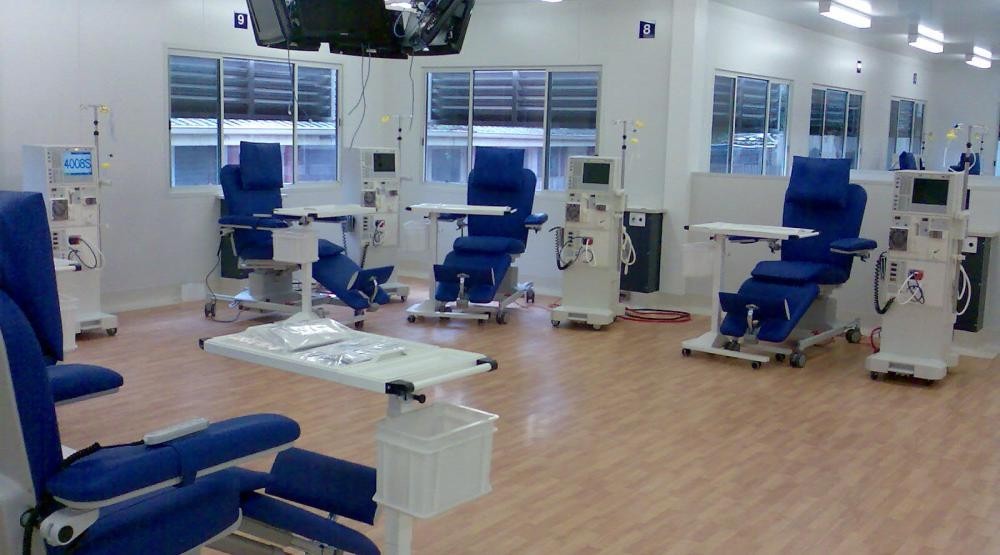
We were thanked often for bringing Zofran to market. I remember vividly one visit to a large oncology clinic in South Bend, Indiana. This large clinic had its own pharmacy and a staff of pharmacists who told us that Zofran had become the number one drug they mixed. We then met with a few oncologists. One of them took us out to the patient treatment area where about 10 patients were sitting in infusion recliners reading books, watching TV or listening to music. He commanded their attention and introduced Jon and I as the folks who brought them Zofran. They immediately broke out in applause and many wanted to hug us. They all thanked us profusely and several said that they won’t sit down in the chair until they bring them “my Zofran”. It’s a bit of an awkward situation being thanked for the wonders of a drug. But I’d come to find that accepting personal credit for the research, clinical development, regulatory work, manufacture and delivery of a drug was easier than explaining my small role. It just seems to make everyone feel better. Later, back in the doctor’s office, he told us that several of those we’d met had stopped therapy and only returned because Zofran had become available to control their debilitating side effects. He said they are doing great and in a real sense, Zofran saved them. See how wrong I was about the value of this drug?
Zofran was eventually launched in tablet form, making it more accessible to many. And it was also approved by the FDA for post-operative nausea and vomiting, a large and poorly served market. Also, many pregnant women came to learn about Zofran. Several other drugs in the same class were eventually introduced, but Zofran, now generic, remains the most prescribed product of its kind. Suffice it to say that Zofran was a very rewarding product to sell.
Aside: As I thought about the interaction at South Bend Oncology Associates, I smiled when I thought about the Sales Representative I was with that day. His name is Jon and I hired him several years before when I moved into a new sales division named Cerenex. I had the rare opportunity of hiring my entire 12-person team. I took my time and hired a diverse group of people. I grade myself a B for my hiring efforts. Some great Reps, some good Reps, and a few clunkers. One Rep I had to fire in his first year. (I should tell that story!) One Rep was simply crazy. I intentionally tried to hire at least one Rep right out of college to balance group experience and bring naïve eyes to the job, and Bob turned out to be wonderful. A great communicator, he did a stint in home office Communications department prior to being promoted to a District Sales Manager position in Idaho. Some years later, as a Regional Vice President, I was assigned the Rocky Mountain states, and happily, Bob, now a manager, reported to me once again. Finally, in that first Cerenex district, there were two of the best Reps I’d ever hired (and I’ve had a hand in hiring more than a hundred). Jon was one of those two. He is a down-to-earth guy with a quick smile and an earnest way about him. He is from a farming background and is comfortable in an office or a field. He and his dad built most of his house, he raised animals, even grew heirloom potatoes to sell to local gourmet restaurants for a while.

Jon was also the guy who asked me, as we were driving past a cornfield, how many cobs of corn grew on a corn stalk. I guessed 5. Do you know? It’s 2. ONLY 2! And not even two great ones. There’s a major and minor; one big and one small. How inefficient! I made him pull over to prove it.
Anyway, one day we are together visiting a sleep specialist to discuss a drug called Requip for Restless Legs Syndrome. I’m fully aware that RLS sounds like a disorder invented by a drug company, but to those who suffer from the unpleasant sensations and uncontrollable urge to move the legs, it is no laughing matter. As it turns out, this neurologist suffered with RLS himself for many years and was taking a competitive product in the same class as Requip. Marketed by a less than compliant company, this competitive product was stealthily marketed for RLS before securing FDA approval; a major no-no.
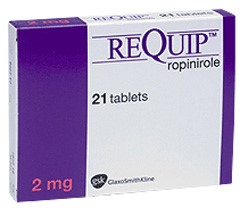
Requip, originally a Parkinson’s drug, was now the first drug in this class to receive FDA approval for RLS, and Jon was following up a previous call where the doc agreed to try it on himself. We walk in and see the doc with a patch on his forehead. He sees Jon and comes over to admonish him and say that Requip will not see the light of day in his office. He goes on to tell us that he tried it a week ago, before getting into the shower. When in the shower, he became dizzy, lost his balance and hit his head on the tile, causing a gash that required stitches. We are horrified, but strangely we are choking back laughter. Could this situation be any worse? Jon apologizes and knows when to retreat. These drugs do cause dizziness and different patients have different responses, he explains, and we secure his information to call into the adverse event reporting system. Upon leaving the office we finally let go and double over in laughter. Not at the poor doctor’s situation (well, a little) but just as much at the monumental challenge Jon now has to navigate. But he is up for it and makes weekly calls on the guy, making small inroads each time, finally getting him to try it on a few patients. He has success. Within 3 months this doctor is the highest prescribing physician of Requip for RLS, not only in Jon’s territory, but the entire state. That’s all you need to know about ‘the Weele’.
PS: As long as I brought up Requip, I want to say a few words about Parkinson’s Disease. Requip was originally developed as a treatment for Parkinson’s, a devastating disease caused by degradation of neurons in the brain that produce dopamine.

Symptoms include tremors, muscle rigidity, and changes in speech and gait. The disease is chronic, progressive, irreversible, and incurable right now. The best doctors can do is slow the progression and treat the symptoms. Fortunately, there is a magic bullet: Sinemet. Sinemet contains a chemical, levodopa, that coverts to dopamine in the brain and quickly reverses the symptoms of Parkinson’s. Unfortunately, as with most magic bullets, there are complications. Over time, more and more Sinemet is required for effect, and after a while Sinemet itself can cause a distressing symptom called dyskinesia, or involuntary, jerky movements. The goal then is to treat patients with other means in order to ‘spare’ Sinemet, and maximize its impact without causing disturbing side effects. It’s really an art, and that’s where drugs like Requip and others come in. These other drugs are generally difficult to use and not as effective as Sinemet, but they do have impact and usually should be used before Sinemet. Unfortunately, most patients are initially diagnosed with Parkinson’s by their Primary Care physician. Now Primary Care physicians are incredible people. They have to know a little (well, hopefully, more than a little) about A LOT of different diseases, and how to treat them. It’s an incredible task and I tip my hat to them. But many, not all, but most, primary care physicians will treat a new Parkinson’s patient with Sinemet, and the patient will declare them miracle workers. But as many Neurologists have told me, this is one of their greatest frustrations, because the PCP has jumped the gun and irreversibly changed the course of the disease for that patient. Now…I am obviously not a doctor, so should not be giving medical advice. But I implore you to seek out a Neurologist consult before any treatment for a loved one who is diagnosed with Parkinson’s. It may make a world of difference for them.
Be well, and thanks for reading.
 Let me be Frank...
Oh man, Thank You Frank! Such kind words from a great leader. Those were great times and we really had fun doing our jobs. A whole portfolio of Life changing medications!
LikeLike
Amazing how well you have maintained your product knowledge and continue to sharpen your sales saw. Stay young my friend
LikeLike
Great read Frank! Couldn’t agree more with the Parkinsons advice! Had no idea about the corn, only 2! Lol ; )
LikeLike