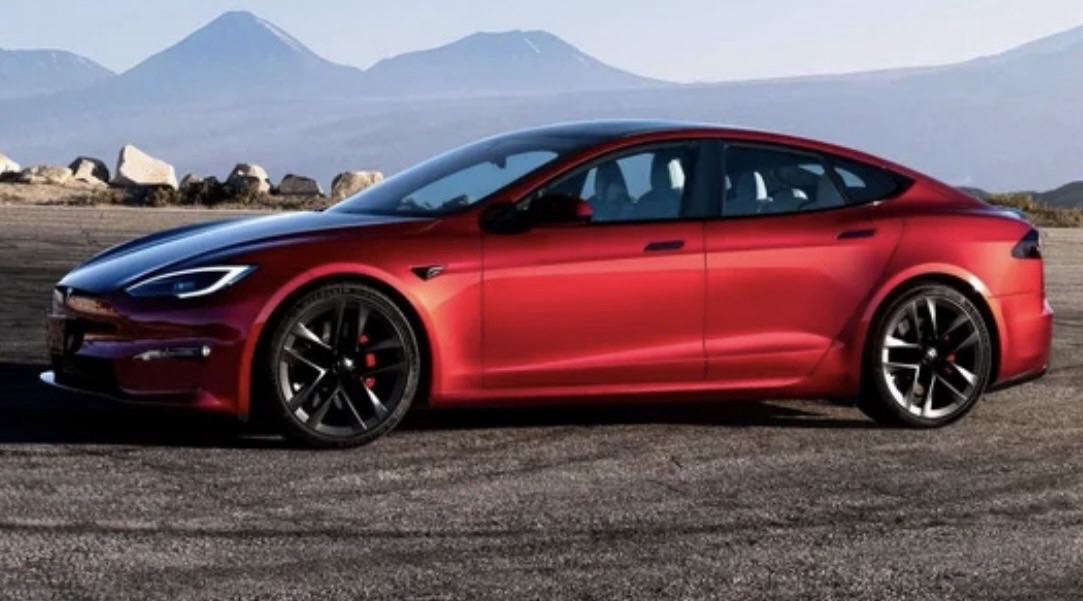
This week Tesla announced the end of the line for the Model S and the Model X.
The reason? Model 3 and Model Y dominate Tesla sales, which, along with most EV sales, are trending way down in America. This is inexplicable to me. I’ve lived for 6 decades and have driven over a hundred different vehicles. For many years, I’ve been blessed with a brand new car every 2 years through my job. In addition, I’ve owned a wide variety of personal cars, including those from Honda, Toyota, Mazda, Audi, Ford, Buick, Chevrolet, Chrysler, Pontiac, Mitsubishi, Acura, BMW, Lexus and Kia. From Miatas to Mini-vans. Corolla to Corvette. Some lower end, some decidedly not. And my 2018 Tesla Model 3 was the single best car I’ve ever driven. Hands down. Nothing else even close. Until I traded it in for a 2023 Model S. Fast as hell, quiet, comfortable, rides on rails, with technology that works like magic and gets better with each over-the-air update.
The country is in a strange place right now. It’s worrisome for sure. Sure, politics play a big role, as well as competing economic interests. But the reluctance to adopt far superior technology is just another indication that we are struggling. A few months ago, I read a quick post wondering where we would be if Electric cars were invented before gasoline powered cars. So this is how I imagine a conversation between an internal combustion engine inventor named Rube and his friend:
If Electric Cars Had Come First
Rube: have a great idea! Instead of powering a car with an old-fashioned rechargeable battery, I have developed a new propulsion system!
Sounds interesting…
Yep, I’m calling it an internal combustion engine because it relies on small explosions of a vaporized mixture of gas and air.
Gas?
Yes. Refined oil. Dinosaur juice. Reliably combustible.
Sounds dangerous. So you’d have a reserve of this gas in the car?
Yes, at least 20 gallons in a tank connected to the engine. Probably mounted right behind the passengers. We’d have to build hundreds; no thousands; no hundreds of thousands, of stations where this gas would be held in huge tanks under the ground. Cars could then refuel at their leisure.
That seems like a big undertaking.
Maybe. But don’t worry; you’ll be able to get a cup of coffee, or a lottery ticket, or a microwaveable burrito while you fill up with gas.
Sounds intrusive at best, but back to the engine…
Yes. The gas would mix with air before being injected through a valve into a cylinder. Inside the cylinder a piston moves down to help draw in the mixture. The valve then closes while the gas mixture is compressed and an electric signal is sent to an igniter called a Spark Plug. This creates a small but powerful explosion which drives the piston down. This downward force is captured by a rod connected to the piston, which then turns a connected rod called a crankshaft.
Wow. Sounds complicated, but impressive. And one cylinder is enough to propel a car?
Well no. You’d need at least 4 cylinders timed to perfection so that the crankshaft is fed at the right time. My first attempt used a mechanical method with a distributor cap, a rotor and points to control the timing. But don’t worry, I’ve devised an electronic ignition computer to handle that now.
Oh good. But what happens to the spent gases?
Good question. They are collected when the piston moves back to the top of the cylinder and a valve opens to let the spent gasses out. It travels through a system of aluminumized steel pipes and out the back of the car.
Sounds dangerous to those behind the car?
Well, we will put a few devices in the exhaust path designed to take dangerous chemicals out of the gas. And it will be loud, so we’ll also place a baffled muffling device in the path to reduce exhaust sounds.
But I bet you are generating a lot of heat.
Yes, that’s why the block that holds the cylinders and pistons will need to be well-oiled and cooled. We will bore holes throughout the engine and fill them with a liquid designed to lower the freezing point and raise the boiling point of the water that circulates through a finned radiator with a fan blowing air through it. Of course, we will need to add a device to pump the water/coolant through the system.
Wow. Is the oil cooled too?
Well, a little but it will eventually break down in viscosity so will need to be replaced with new oil every few thousand miles. Oh, and of course we’ll add a pump to recirculate the oil too.
Lots of pumps.
Yes, and don’t forget the fuel pump. Don’t worry though, we will add a pulley to the crankshaft that connects to other pulleys by a belt that will drive many of these pumps as well as the radiator fan, and air conditioning and steering devices.
Well, it’s beginning to seem like a lot…
Well, maybe. But we will need to add one more pump. For the transmission fluid.
Transmission?
Yep. My engine will only work in a narrow RPM range. Too low and it will fail, too high and it will break apart. So we will need to optimize its power and torque in this narrow range. We’ll do this by adding a “transmission”. It will contain a torque converter, multiple “planetary gears”, clutch packs, and valve bodies, all lubricated with a special fluid and that pump. Of course we’ll add sensors and electronics to control the whole shebang.
I’m speechless. At least there are no batteries.
Well, there will be one. A large 12-volt job whose primary responsibility will be to power the Starter.
The Starter?
Yes. We’ll need to add a small powerful motor to start the whole ignition process. The motor will push a gear into the engine block to engage a large flywheel attached to the crankshaft to get the pistons moving. Once the engine starts, the gear will disengage and off we go!
*blank stare*
Well, what do you think?
*closes mouth* Well, I think it sounds very complicated, messy, delicate and expensive to build and maintain. It must have hundreds more parts than an electric car, Mr. Goldberg.
Oh no, thousands more. But I predict that most people will absolutely love it and we will soon be living in Internal Combustion Heaven! Now, heat me up one of those burritos!
 Let me be Frank...
Great Read Frank!
LikeLike